Dr. Ross Cunningham has more than a decade of experience in materials science, additive manufacturing, and metallurgy. He holds dual B.S. degrees in Engineering and Business from Lehigh University and an M.S. and Ph.D. in Materials Science & Engineering from Carnegie Mellon University. He can be reached at rcunningham@nslanalytical.com.
In this blog, Dr. Ross Cunningham, Director of Science and Technology, shares his insights on the industries and product life stages that require environmental testing, why commercial space manufacturing is shifting from custom builds to high-volume production, how testing approaches change depending on whether a product’s environment is known or still being defined, and what to do when a part has no clearly defined testing spec to follow.
To listen to Dr. Cunningham’s answers, click here to hear the interview.
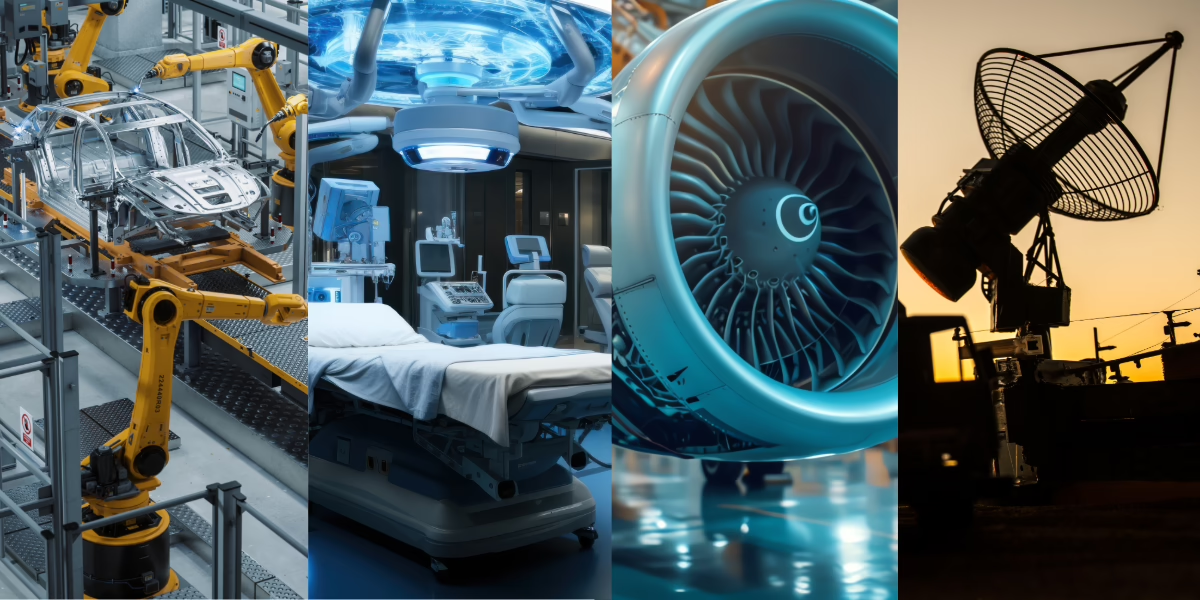
Cunningham: We test a broad range of products at RMTS, from e-commerce packaging to satellite components – anything that needs to prove it can survive its anticipated environment or its journey to get there. Whether it’s a part for a satellite, electronics built for the battlefield, and a surgical instrument, each one has to prove it can withstand its worst-case conditions before it’s accepted for use.
The core industries driving this kind of testing include aerospace (both commercial and defense), the emerging commercial space sector, military and defense systems, medical devices, and automotive. Each has its own standards bodies and requirements behind it, whether that’s the FAA, a defense prime contractor, a device’s regulatory pathway, or an automotive OEM’s own specification.
Testing spans a product’s full life cycle: transportation, storage, temperature swings, humidity, altitude, and corrosive exposure, layered on top of whatever stress a product experiences during actual operation, such as a rocket launch. For these industries, testing isn’t a nice-to-have. It’s typically a requirement before a part is accepted onto a program at all.

Space is generating a lot of activity right now. 2025 was a record year twice over: worldwide orbital launch attempts and satellite deployments both hit new heights, and the pace shows no sign of slowing.
Several factors are driving it: reusable launch has brought the cost of reaching orbit down substantially, multiple companies are building out mega-constellations, and rising defense investment in space is stacking on top of the commercial boom. Manufacturing is shifting as well. Satellites and supporting components are increasingly produced on assembly lines rather than as one-off custom builds. With some forecasts calling for roughly 17,000 small satellites launching over the next decade, this is an exciting growth area for us.
The shift towards mass production changes the demand placed on a test lab. Work that used to be mostly bespoke, one-at-a-time qualification is moving toward repeatable testing at real volume, without any reduction in rigor. Defense programs are heading in the same direction, toward more distributed systems, such as drones – more units and tighter timelines. We’re working with our customers to efficiently define test regimes for this new era of products for extreme environments.
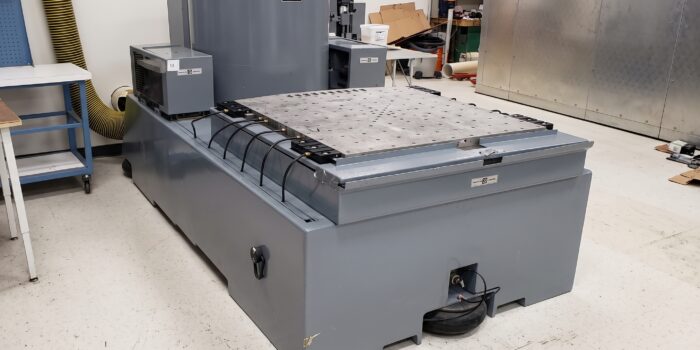
The approach changes based on what’s actually being learned. When the environment a product needs to survive is already known, from a spec, a customer requirement, or measured flight data, testing happens on electrodynamic shakers to replicate that environment precisely and repeatably.
When a product is still in development and the goal is to find weaknesses before it reaches a customer, HALT and HASS testing take a different approach, combining rapid thermal transitions with repetitive shock to deliberately push a product beyond normal conditions and expose design or workmanship problems while they’re still inexpensive to fix. The two methods use different equipment because they answer different questions: one confirms a product meets a target, the other looks for where it might fail.
One example: a customer developing a new enclosure wasn’t sure which approach applied. Working through the program timeline together, the recommendation was HALT screening early in development to catch design weaknesses cheaply, followed by formal qualification vibration testing on electrodynamic shakers once the design was locked. That’s typically how the decision gets made in practice. It’s rarely a matter of choosing one method over another; it’s about matching the right tool to the specific question being asked.

For space and defense hardware, testing without a well-defined spec is the norm rather than the exception. A consumer or automotive part usually tests against one fixed, published standard. Space and defense hardware often doesn’t work that way: the actual levels a part needs to survive depend on where it sits on the vehicle, what mission or launch profile it’s flying, and what’s been measured or predicted for that specific program. A single spec that applies cleanly often doesn’t exist.
The major standards for these industries are written to accommodate this, designed to be tailored to each program’s own predicted environment rather than applied as one universal profile. When a part doesn’t have a defined profile to test against, the starting point is the customer’s own engineering design data, their predicted or measured environment, and we help the customer design the test regime from that. A custom fixture is often built as well, so the part is held and excited the way it will actually be mounted in the field, rather than a generic setup that doesn’t reflect real use.
This makes it critical to have accurate design data to build the test around. A test faithfully reconstructing the product’s intended environment is what makes the results trustworthy and useful.
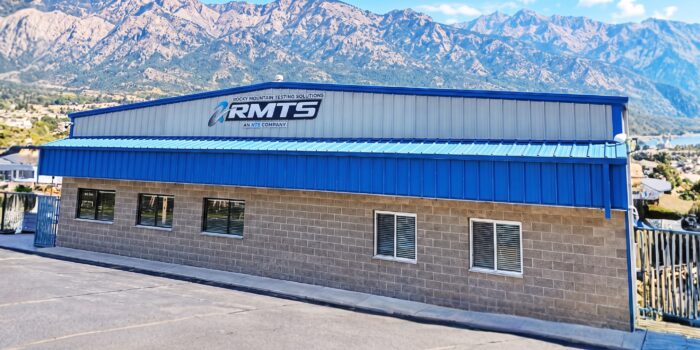
RMTS has spent close to twenty years serving aerospace, defense, medical device, and automotive customers specifically, with the equipment and experience required to support these rapidly scaling industries through their new challenges. As a third-party lab, we provide dedicated testing expertise with an unbiased, independent perspective. In industries where a bad part in the field can mean a mission or safety failure, that objectivity matters.
Another exciting development is that we’re now a part of the NSL family. When a part fails, the next question is always why, and that’s a materials and metallurgy question as much as a testing one. As part of NSL, that failure analysis can happen without bringing in a third party and starting over with a provider that doesn’t have the test history.
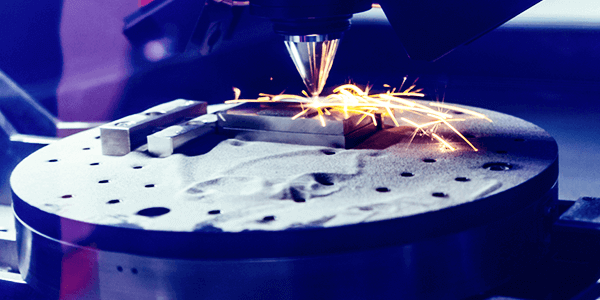
NSL’s reach extends upstream too, as they are often a part of the initial testing of components of the tested assemblies, such as additively manufactured rocket engines. That means a single connected lab can support a part across its entire life, from the material it’s made from, to how it performs under test, to what happened if something goes wrong.
To watch the video of Dr. Cunningham’s interview, click here. To learn more about vibration and shock testing, you can find Dr. Cunningham’s insights here.
________________________________
Looking to dive deeper into how third-party testing can support your unique material needs? Check out NSL’s resources below:
Materials Matter: This educational hub page is a trusted resource for material science information.
Webinars and White Papers: Dive into specific topics in this library of educational webinars and white papers.
Video Library: View these helpful videos about everything from additive manufacturing to spectroscopy and more.
NSL Analytical Services, Inc. is an independent materials testing lab that specializes in metallurgical, mechanical, chemical, and optical testing for mission-critical industries.
Contact our experienced, accredited team to discover how we can deliver accurate, repeatable testing results with lightning-fast turnarounds, giving you confidence in your material performance and adherence to quality standards and regulations.
Dr. Ross Cunningham has more than a decade
Ben Pratt is the Business Development Manager –

On October 6, 2025, NSL’s Dr. Ross Cunningham



NSL Analytical
4450 Cranwood Parkway
Cleveland, OH 44128
(216) 438-5200
(216) 438-5050
NSL Metallurgical
4564 Johnston Parkway
Cleveland, OH 44128
(877) 560-3943
NSL Analytical
4450 Cranwood Parkway
Cleveland, OH 44128
(216) 438-5200
(216) 438-5050
NSL Metallurgical
4564 Johnston Parkway
Cleveland, OH 44128
(877) 560-3943