The nuclear power industry relies heavily on materials testing to ensure the safety, reliability, and long-term performance of its facilities.
Materials in nuclear reactors face extreme conditions – including high temperatures, intense radiation, corrosive environments, and significant stress loads – which can lead to degradation over time.
For these reasons, suppliers of materials to nuclear power facilities require comprehensive testing to meet demanding material specifications and qualifications, as well as to help monitor degradation, extend plant lifetimes and develop advanced reactor technologies.
All materials involved in nuclear power generation serve essential functions. However, certain materials, particularly boron-containing materials like boron carbide (B4C), are especially critical due to boron’s unique ability to absorb neutrons, and in the right concentrations control or even shut down nuclear fission chain reactions.
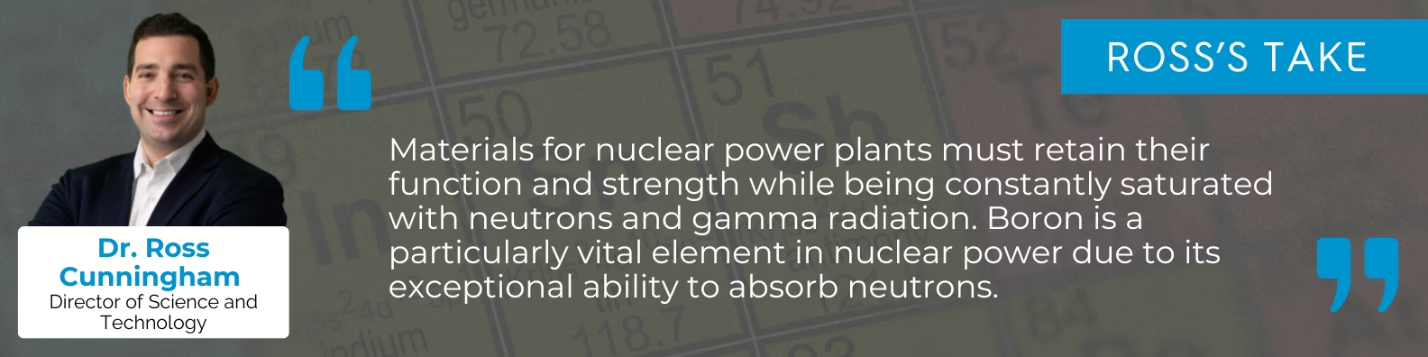
Boron naturally occurs as two stable isotopes: Boron-10 and Boron-11.
While they are chemically identical, the differing nuclear structures result in different probabilities of interacting with and absorbing neutrons. Specifically, the Boron-10 isotope has an exceptionally high affinity for neutron absorption, or a large neutron cross-section, which makes it a “neutron poison.” This property is fundamental to reactor control and safety in critical nuclear power plant components and systems, such as:
Having the proper quantity of B-10 in a material is paramount to the proper function of these critical components. Naturally found boron typically contains about 20% B-10, making enrichment necessary in many cases. However, the fact that isotopes behave identically chemically makes measuring this a challenge. NSL has worked extensively with our industry partners to develop specialized methods to isolate and accurately quantify the level of each isotope in a material to support these critical requirements.
Isotopic boron determination is just one of the many tests required for the nuclear industry. All critical materials subject to the extreme environments in nuclear power must undergo thorough testing to ensure reliable performance.
Here at NSL, we maintain strict ASME Nuclear Quality Assurance (NQA-1) compliance. Combined with our experience and specialized expertise, we are an established and proven provider of critical and reliable material testing services for nuclear power generation.
Our testing for nuclear power includes:
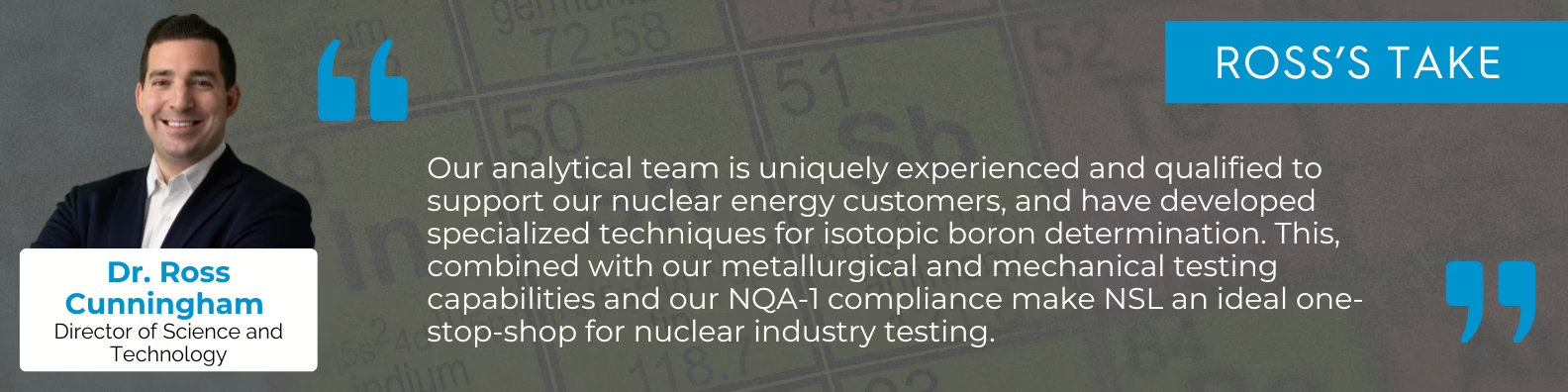
View a detailed list of our materials testing services for nuclear power applications.
Our customers rely on NSL Analytical’s experienced engineers and scientists to provide comprehensive and accurate nuclear materials testing with industry-leading turnaround times. Our advanced analytical chemistry laboratory, coupled with extensive metallurgical and mechanical testing capabilities, enables us to deliver accurate and detailed results across a wide range of materials. To learn more about how our specialized testing can support your nuclear application, contact our experts today.
Looking to dive deeper into how third-party testing can support your unique material needs? Check out NSL’s resources below:
Materials Matter: This educational hub page is a trusted resource for material science information.
Webinars and White Papers: Dive into specific topics in this library of educational webinars and white papers.
Video Library: View these helpful videos about everything from additive manufacturing to spectroscopy and more.
NSL Analytical Services, Inc. is an independent materials testing lab that specializes in metallurgical, mechanical, chemical, and optical testing for mission-critical industries.
Contact our experienced, accredited team to discover how we can deliver accurate, repeatable testing results with lightning-fast turnarounds, giving you confidence in your material performance and adherence to quality standards and regulations.

Ben Pratt is the Business Development Manager –

On October 6, 2025, NSL’s Dr. Ross Cunningham
Sometimes the right path finds you, not the



NSL Analytical
4450 Cranwood Parkway
Cleveland, OH 44128
(216) 438-5200
(216) 438-5050
NSL Metallurgical
4564 Johnston Parkway
Cleveland, OH 44128
(877) 560-3943
NSL Analytical
4450 Cranwood Parkway
Cleveland, OH 44128
(216) 438-5200
(216) 438-5050
NSL Metallurgical
4564 Johnston Parkway
Cleveland, OH 44128
(877) 560-3943