Reliable and predictable powder behavior is critical to the success of Additive Manufacturing (AM) processes. As this industry continues to grow and applications become more demanding, new testing methods are being developed to ensure your powder meets specifications and behaves the right way every time.
Additive manufacturing is quickly becoming the go-to process for complex, critical parts in industries such as aerospace, automotive, and medical devices. For these manufacturers, process reliability is a paramount challenge to successfully adopting AM. There are many factors that impact reliability, but powder flowability is one of the key challenges, as it is integral to the performance of most AM processes, often with severe impact on the quality of the final product.
Predicting powder behavior in AM involves more than determining whether it flows – it depends on a complex interplay of material properties and processing conditions that influence performance in the machine.
Fully understanding and optimizing this property is crucial to ensuring repeatability between builds, especially as powder is reused over time or after extended storage. It ensures uniform density, prevents defects, and can ultimately make the difference between high-quality builds and costly failures.
As new and more demanding applications emerge, advanced testing methods offer far more accurate ways to determine optimal powder flowability.
Powder flowability is influenced by factors such as particle size distribution, shape, surface texture, chemistry, surface moisture content, and how the particles pack together. Many of these are interdependent – smaller particles, for example, tend to absorb more moisture due to higher surface area – making flow behavior difficult to predict from a single parameter. Accurate characterization therefore requires comprehensive testing to capture the combined effects and better predict performance in real-world applications.
Our customers rely on the experts at NSL to utilize proven and trusted testing methods to deliver accurate and timely testing of their powder. To learn more about all the different types of tests we run on powder, see our blog on powder characterization techniques.
Two common tests for assessing flowability are the Hall and Carney (Gustavsson) flow tests. These gravity-driven methods measure the time it takes for a fixed volume of metal powder to flow through a funnel with a defined orifice. The Carney flowmeter, with a larger orifice, is used for powders that do not flow through the Hall funnel.
(These tests are also used to determine apparent density – the density of the powder after flowing into a specified container fed from the funnel).
While simple and repeatable, they are best suited for quality control comparisons of similar powders and do not capture more complex behaviors seen under dynamic conditions. For applications like Additive Manufacturing, where powder flowability is critical to performance, more advanced methods are emerging to provide deeper, process-relevant insights.
One novel tool that is gaining traction for AM powder testing is the rotating drum powder rheometer. This instrument evaluates dynamic flow by recording how the powder tumbles, shears and cascades under variable conditions, such as rotation speed or after exposure to vibrations. This test provides valuable information on the powder’s cohesion and flowability in a visually intuitive and quantitatively measurable form.
Key metrics such as the avalanche angle – the maximum angle the powder can be rotated before flow occurs – offer insight into cohesivity and flow resistance and can be used in a similar fashion to related legacy metrics such as angle of repose.
For example, these two virgin 316 stainless steel powders share the same chemistry and handling history but differ in particle size distribution. The sample on the right, containing finer particles, demonstrates significantly reduced flowability, as indicated by a higher avalanche angle and greater cohesivity.
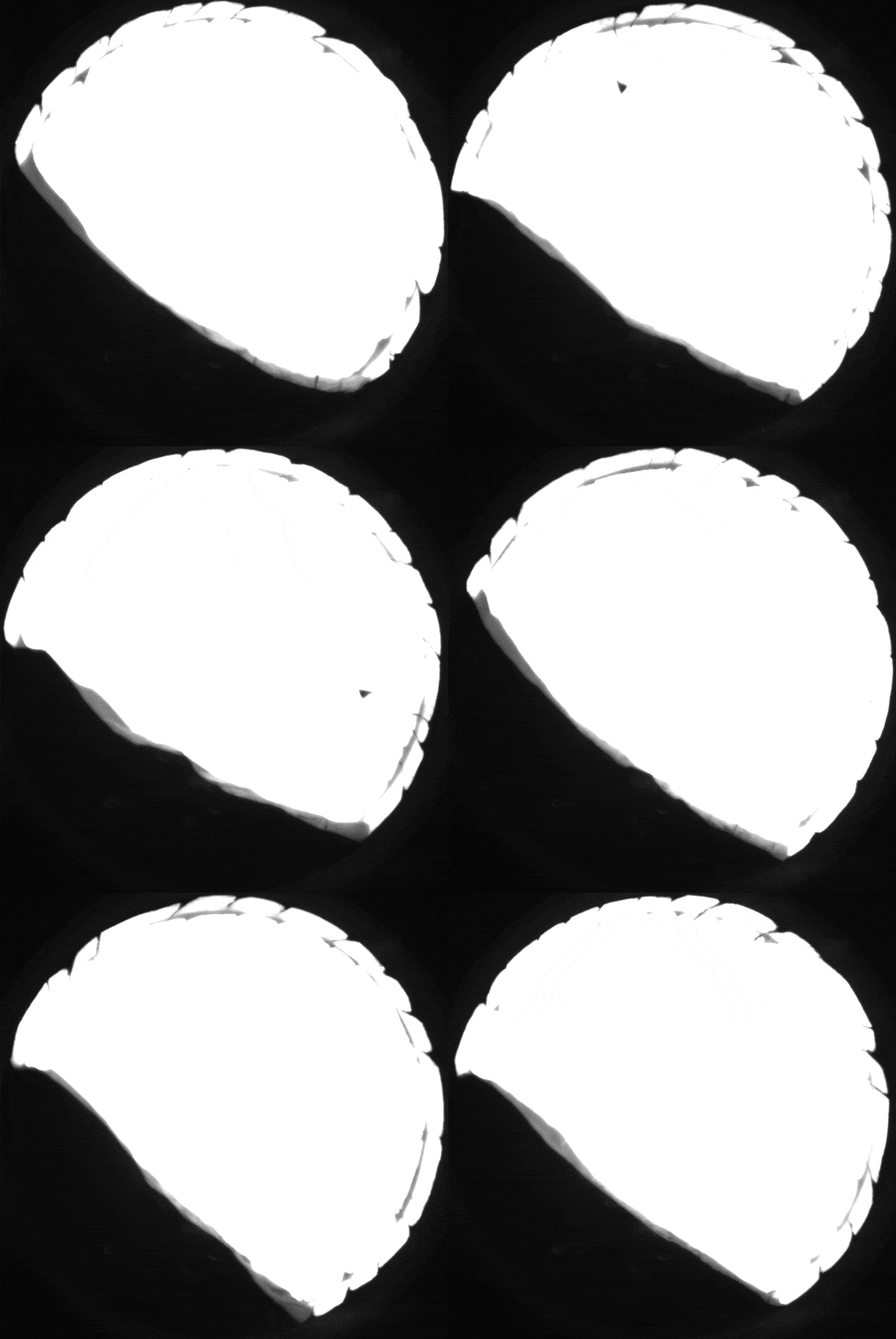
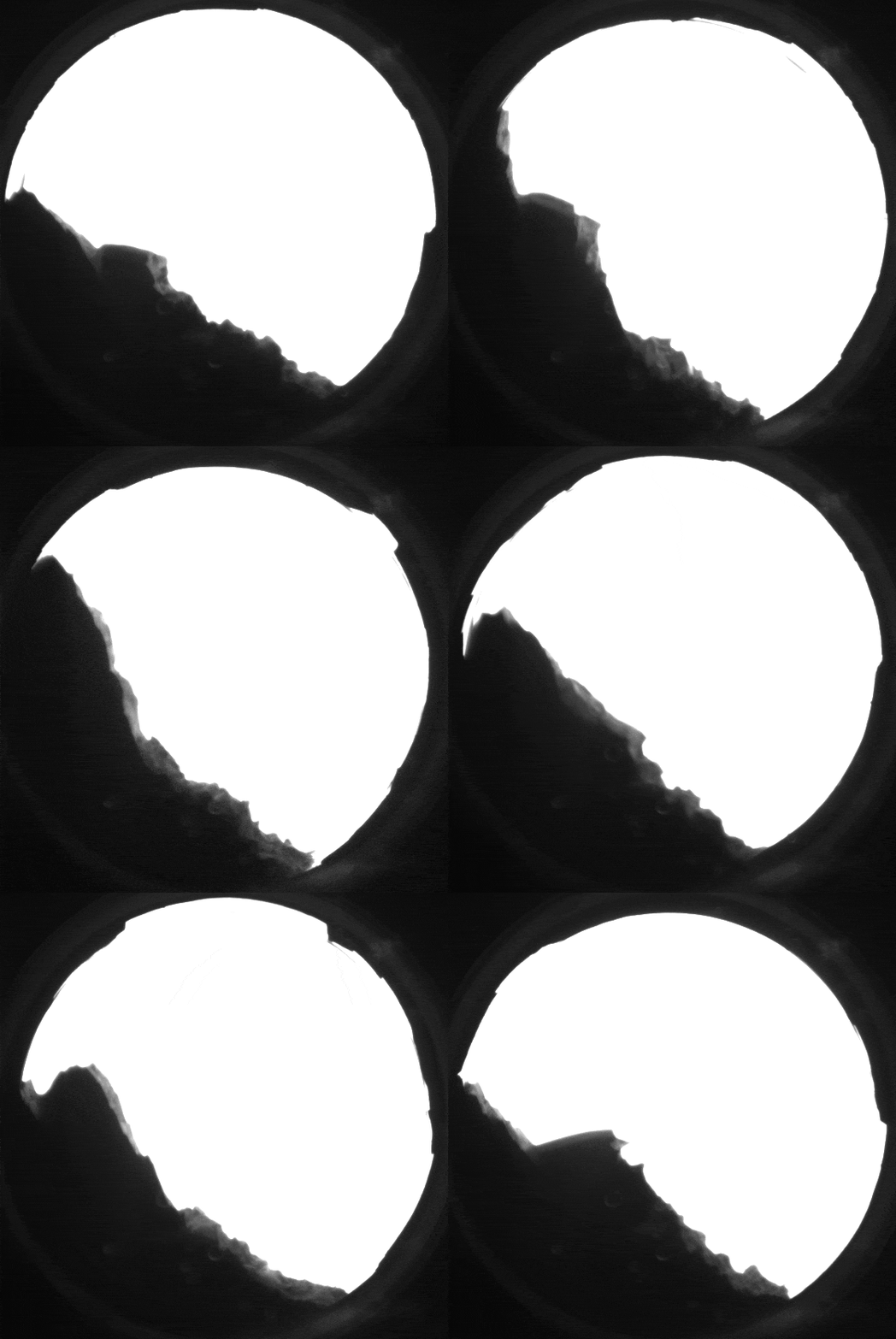
Figure 1: Comparison of two different size distributions of 316 stainless steel powder in a rotating drum rheometer, with the sample on the left having a larger size distribution and exhibiting better flow properties.
These easily observed metrics highlight just a fraction of what our advanced powder characterization methods can reveal. When the consequences of a powder-related failure to Additive Manufacturing companies are as costly as a failed build or bad product, there is no such thing as too much information on your powder. These tools in the hands of NSL’s powder characterization experts provide our customers with greater confidence that their materials are going to behave the right way, every time.
Looking to dive deeper into how third-party testing can support your unique material needs? Check out NSL’s resources below:
Materials Matter: This educational hub page is a trusted resource for material science information.
Webinars and White Papers: Dive into specific topics in this library of educational webinars and white papers.
Video Library: View these helpful videos about everything from additive manufacturing to spectroscopy and more.
NSL Analytical Services, Inc. is an independent materials testing lab that specializes in metallurgical, mechanical, chemical, and optical testing for mission-critical industries.
Contact our experienced, accredited team to discover how we can deliver accurate, repeatable testing results with lightning-fast turnarounds, giving you confidence in your material performance and adherence to quality standards and regulations.
Dr. Ross Cunningham has more than a decade
Dr. Ross Cunningham has more than a decade

Ben Pratt is the Business Development Manager –



NSL Analytical
4450 Cranwood Parkway
Cleveland, OH 44128
(216) 438-5200
(216) 438-5050
NSL Metallurgical
4564 Johnston Parkway
Cleveland, OH 44128
(877) 560-3943
NSL Analytical
4450 Cranwood Parkway
Cleveland, OH 44128
(216) 438-5200
(216) 438-5050
NSL Metallurgical
4564 Johnston Parkway
Cleveland, OH 44128
(877) 560-3943